
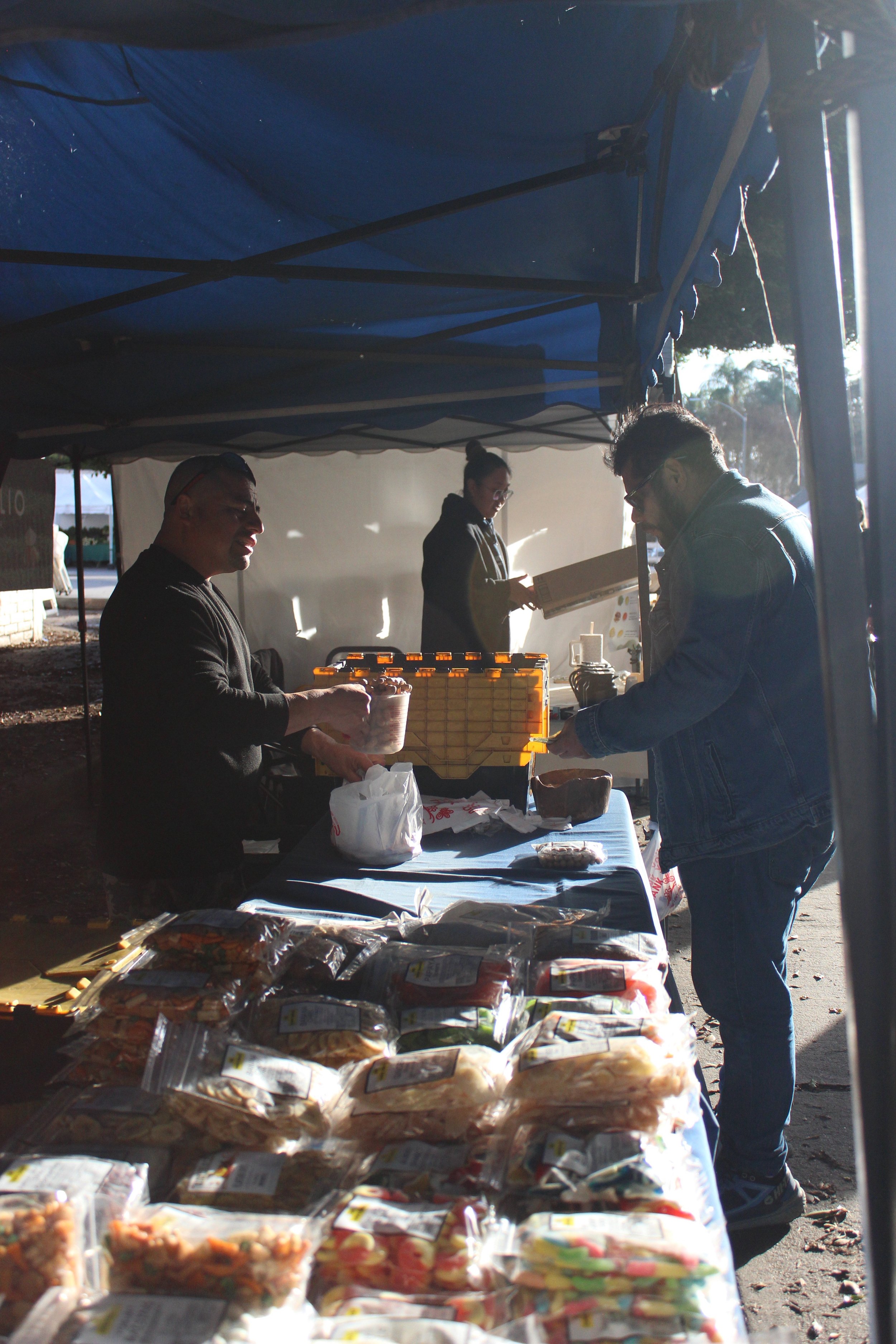
food
The source of substance and nutrition that every living being on this planet needs, as natural as breathing and drinking water is to human beings, food is the source of life. Yet, as much as it is a right to have access to quality, healthy food, it has now become a privilege due to its commodification. As a result, there are starving communities across the world that are subjected to a certain quality of life and deprived of their right to life, including the communities in our own backyards.
L.os Angeles’ accessibility issue
California is one of the 10 states with the highest rates of income inequality, and this is epitomized in the city of Los Angeles – home to both sprawling palm trees and mansions in Beverly Hills, as well as Skid Row, a neighborhood whose name has become synonymous with seemingly unresolvable poverty. This disparity in wealth directly translates into the resources people have access to, whether that be transportation, homeownership, healthcare or education. All of these issues, in addition to gentrification, systemic racism and imbalanced food systems, intersect to create food deserts and a lack of access to food.
To better visualize all of these seemingly separate issues working in tandem to create one entangled, systemic issue, these abstract ideas can be simplified into the livelihood of a single person and the daily obstacles they may face simply trying to find food. The average low-income individual may have a farmer’s market or grocery store in a neighboring town. Still, without a vehicle–making them solely dependent on public transit–these retailers may be impossible to access. Without a personal vehicle, they may have to address the first and last mile of their trip, unreliable and significant wait times, and issues of personal safety. In addition to the aforementioned obstacle of transportation, the average unhoused individual does not have a permanent address, making food delivery a non-option. Both communities, whether unhoused, low-income, or both, face the same obstacle of a lack of education caused by several different circumstances – nutrition not being taught in schools, a lack of access to internet connection, and more. All of these issues are compounded by arguably one of the most deciding problems – having ample income to afford groceries. What makes this a particularly overarching concern, as exemplified above, is the diverse range of communities it encompasses and how easily any one individual can become subject to its effects.
If there are so many intricate layers to creating food deserts, the solutions to the lack of access to food seem either impossible or too long-term for an immediate, urgent issue. In even starting to remediate this concern, different levels of power can act independently, but more importantly, collaboratively to ensure a basic right to all community areas – community/local, federal, and private corporate level. In terms of education, all three are not only capable but inherently incentivized to utilize all methods possible to bridge the gap between communities and food supplies.
food access la
Food Access L.A. calls itself the “middle-man” between food suppliers like local farmers and consumers like the low to moderate-income families throughout different communities in Los Angeles County. Food Access bridges this gap by organizing weekly farmers' markets in eight communities throughout L.A., from Compton College to Hollywood. Farmers' markets are one of the solutions that are fairly accessible and feasible for local communities to address food deserts. Among its innumerable advantages, markets increase access to fresh and locally sourced food, allow food suppliers to set their own prices and gain greater margins of profit, raise awareness of health and nutrition among the consumer base, and reduce carbon footprint by either eliminating or diminishing the long transportation of goods. Because of its mobility and how it closes the gap between food suppliers and their consumers, as illustrated above, markets present benefits to shoppers, farmers and the environment.
There is a great underappreciation of the value of human connection, community and what our loved ones and we consume. A farmers' market essentially reestablishes all of the aforementioned principles of sustainability and community building that have been replaced and overburdened by the commodification of food. It returns us to the immeasurable value of life’s basic needs that its monopolization has inevitably caused us to forget.
the vendors
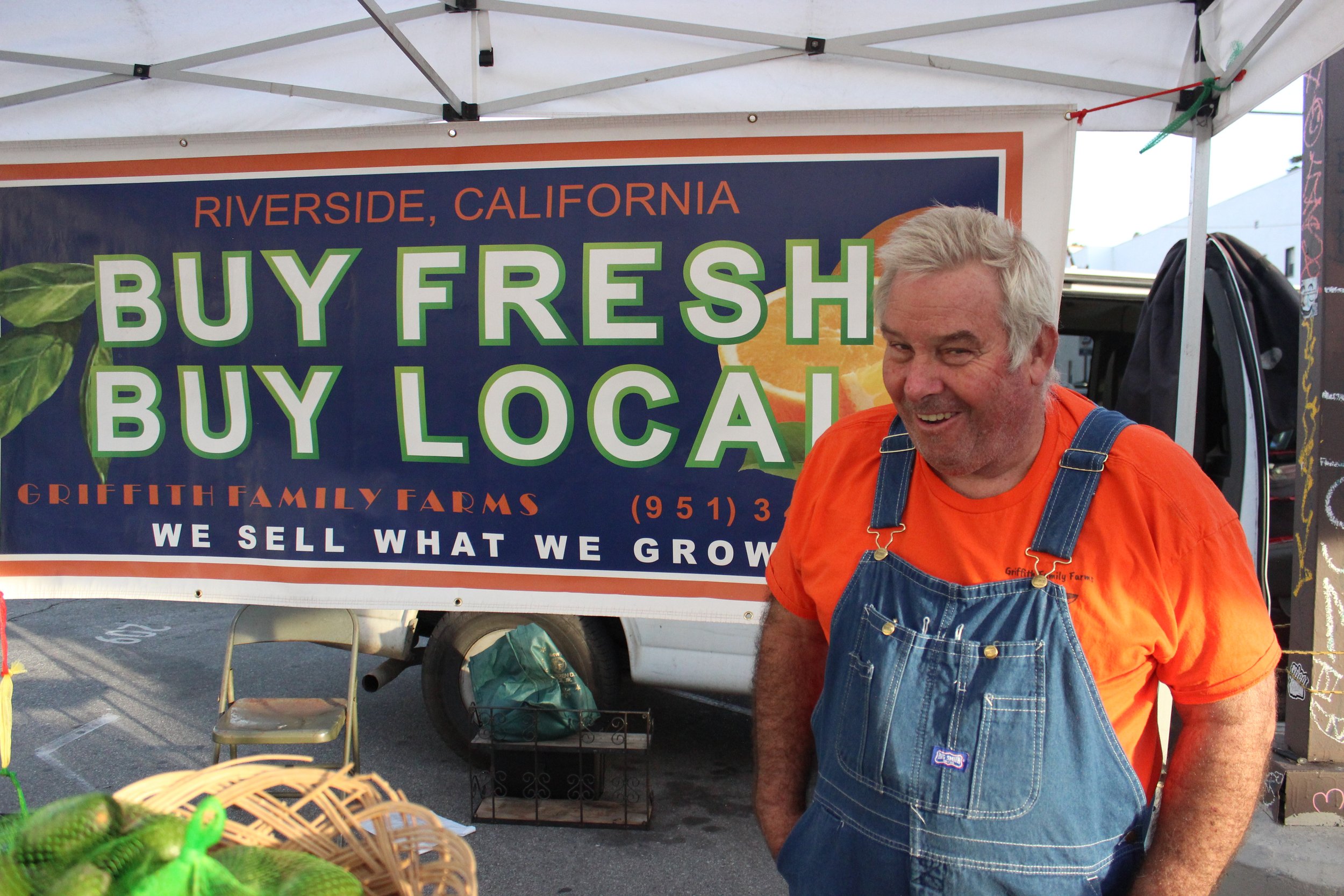
Brian Griffith standing at his stand selling various citrus fruits at the Echo Park Farmers Market
Standing near the parking lot between Logan Street and Echo Park Avenue, flanked by a vendor selling eggs on one side and another vendor selling oranges on the other, was Brian Griffith, selling a variety of produce from cauliflower to Valencia oranges. When I was finally able to find my way to the Echo Park Farmers Market (entering through the parking lot), right from its opening time at 3:30 p.m., Brian’s stand was notably busy with people flanking the produce and with no room but the outskirts of the stand for newcomers to patiently wait for Brian’s time. Mentally making a note to make sure I stopped by the vendor, I explored the rest of the market, talking with other farmers and food suppliers about their line of work, what brought them to the Echo Park Farmers Market and what their lives outside of the market looked like. By the time I returned, it was already near 5 p.m., and Brian’s stand had somewhat emptied. An affable man in his mid-60s, eager to cut for me sample slices of his oranges, Brian Griffith was a former teacher before starting to sell fruit in the late 2000s. His parents had a two-acre orange grove in Riverside, which Brian decided to bring to farmers' markets to sell. Over the past 20+ years, Brian has grown those two acres into Griffith Family Farm, and the straw hat and blue overalls he wore at his first sale have become a signature look along with his oranges.
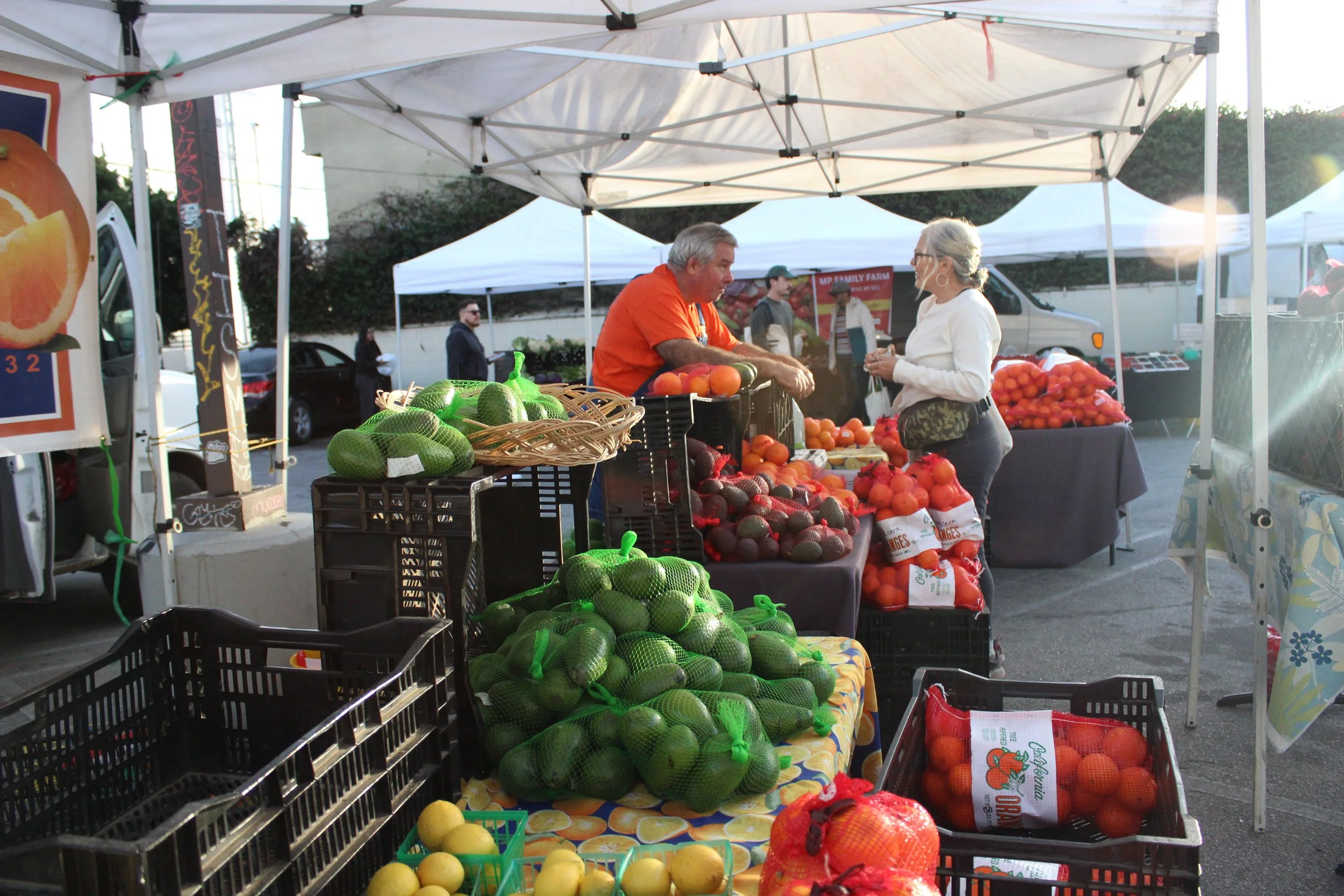
Griffith strikes up a conversation while giving samples of grapefruit and Valencia oranges for a customer
The vendors I met during my walk through the market had uniquely individual stories, like Emily, who started making jams and jellies for herself at home before creating Happy Jellies, and Garcia Ruelas, who brings his eggs fresh from his own pasture-raised chickens in Visalia, California. Each of their uniquely irresistible personalities is what makes up this farmers’ market and is how they’ve been able to educate the communities that buy their produce. The underlying factor uniting these vendors and consumers is their passion for nutrition and for green, sustainable processes that ensure fresh food for everyone.
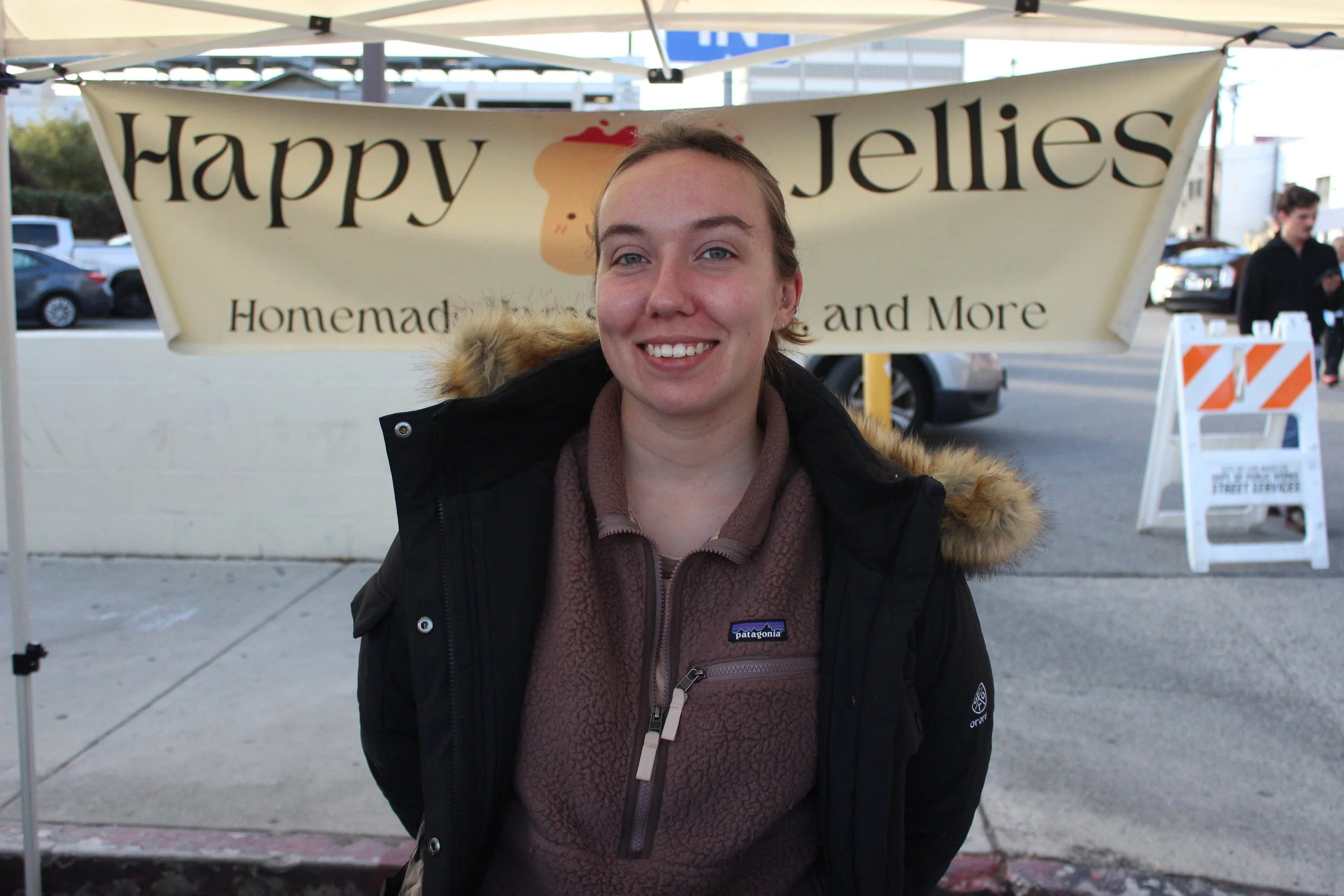
emily arendt’s
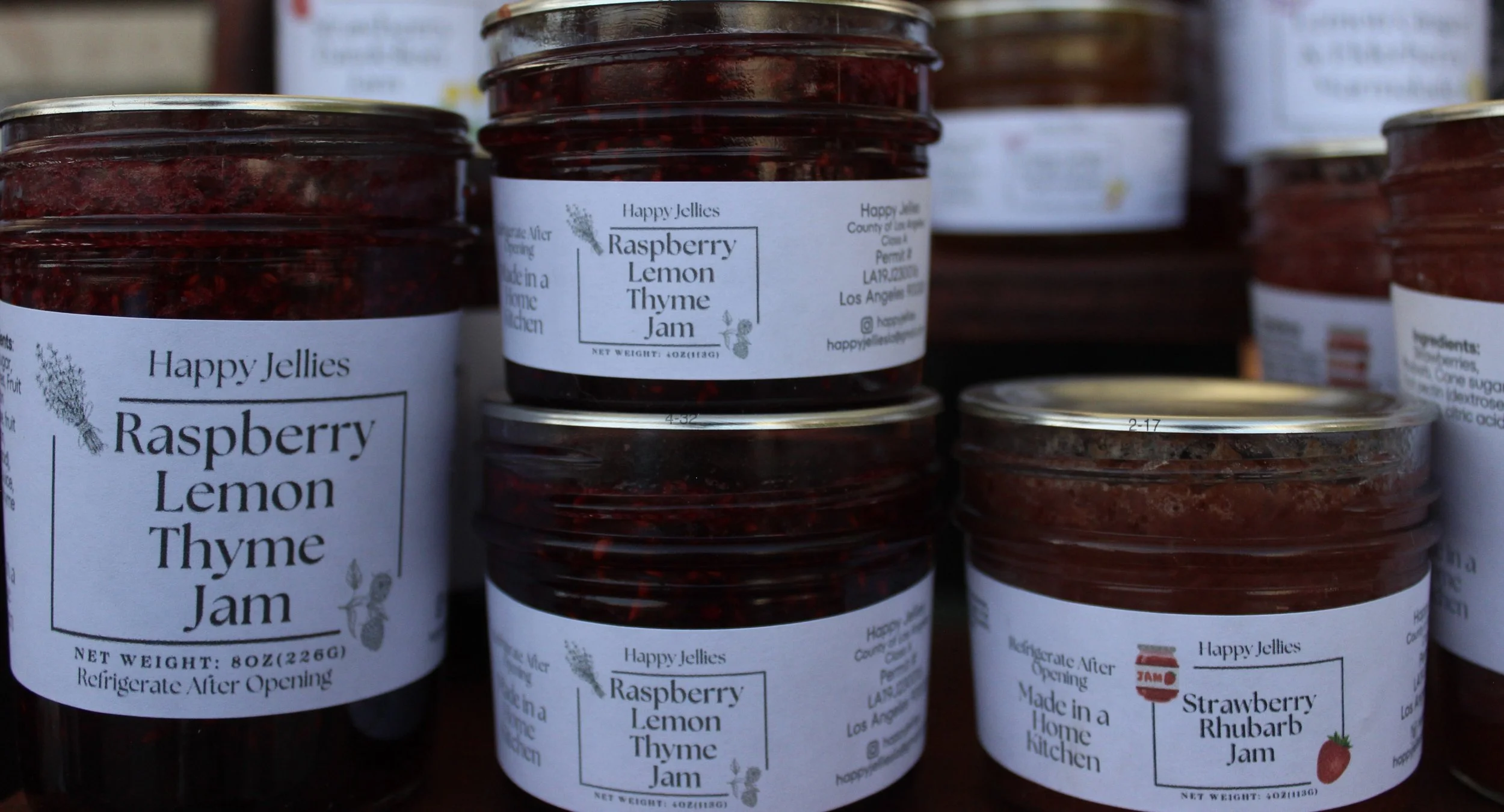
happy jellies
garcia ruelas’
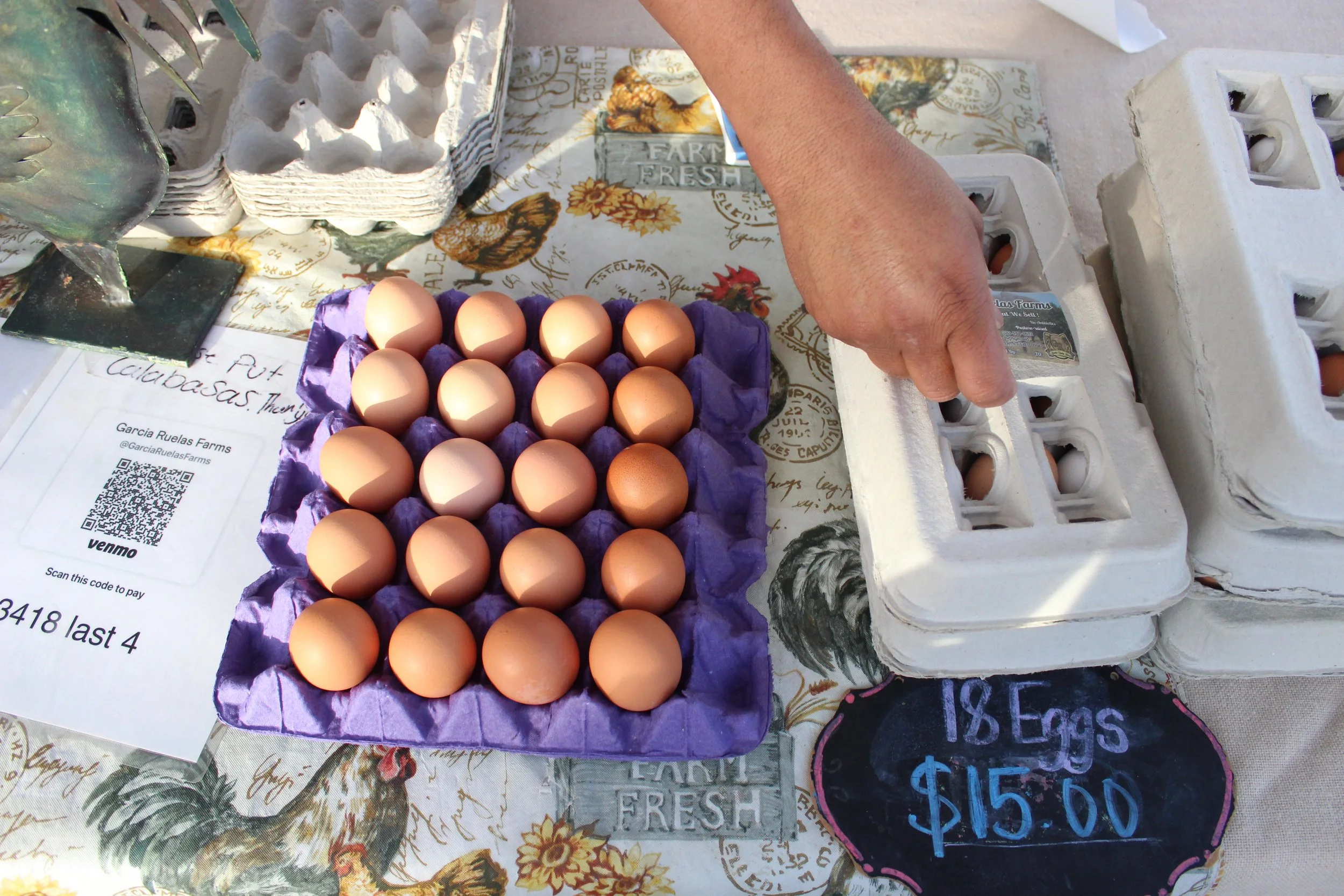
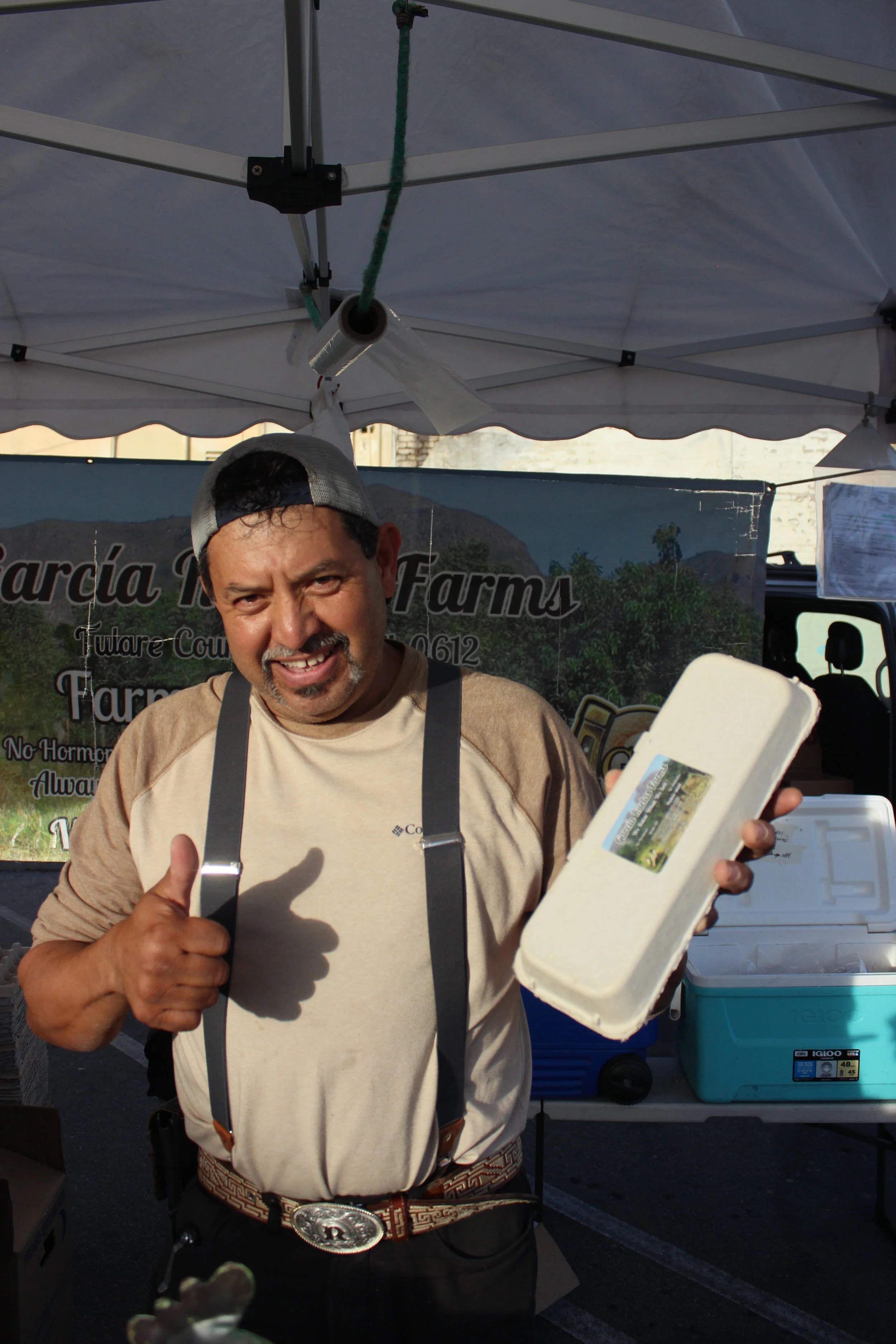
and his signature phrase, “Have an egg-cellent day!”
farm fresh eggs
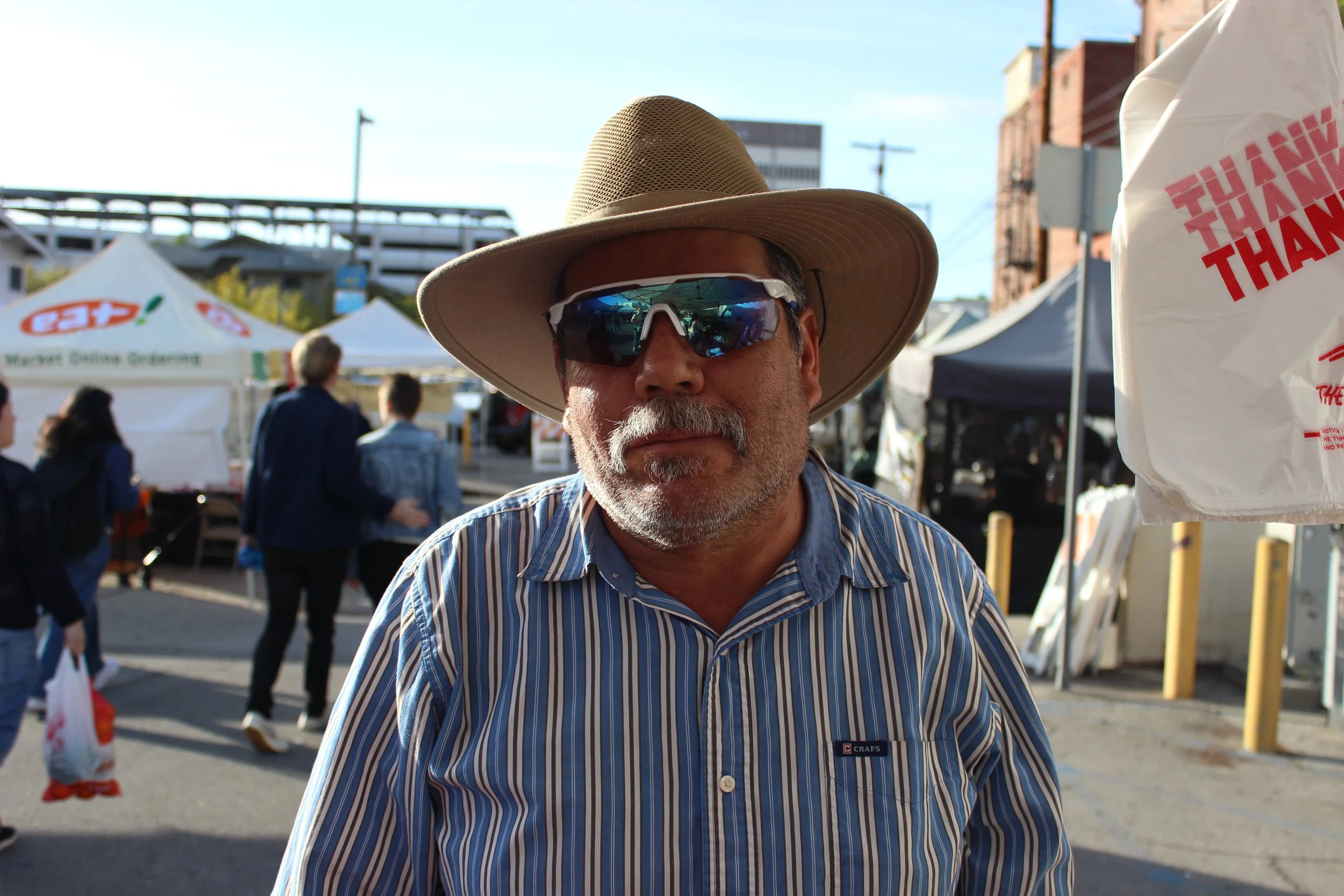
ayala
farm’s
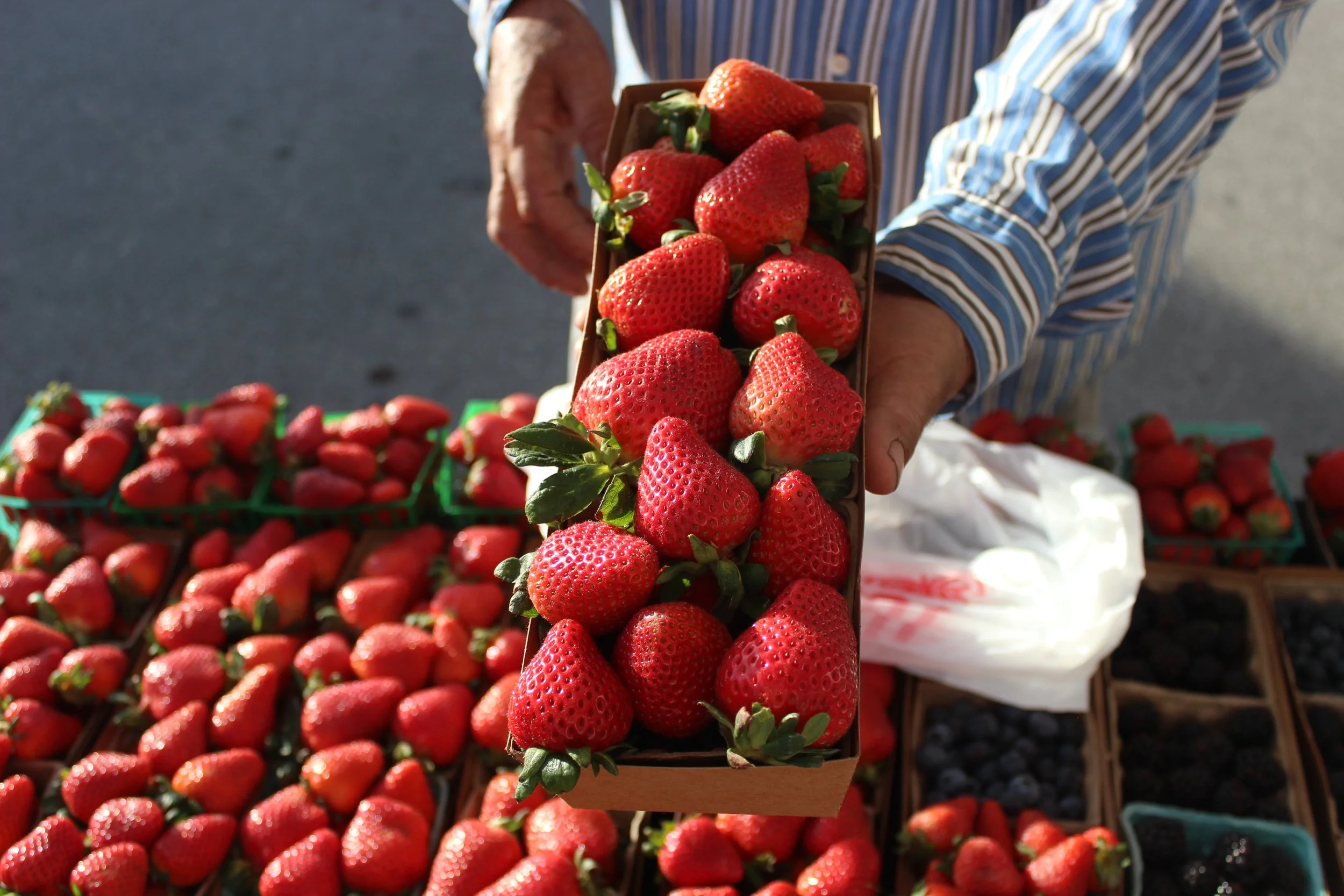
A family-, women- and immigrant-owned farming business focused on regenerative agriculture
naturally grown
strawberries
midnight
mission
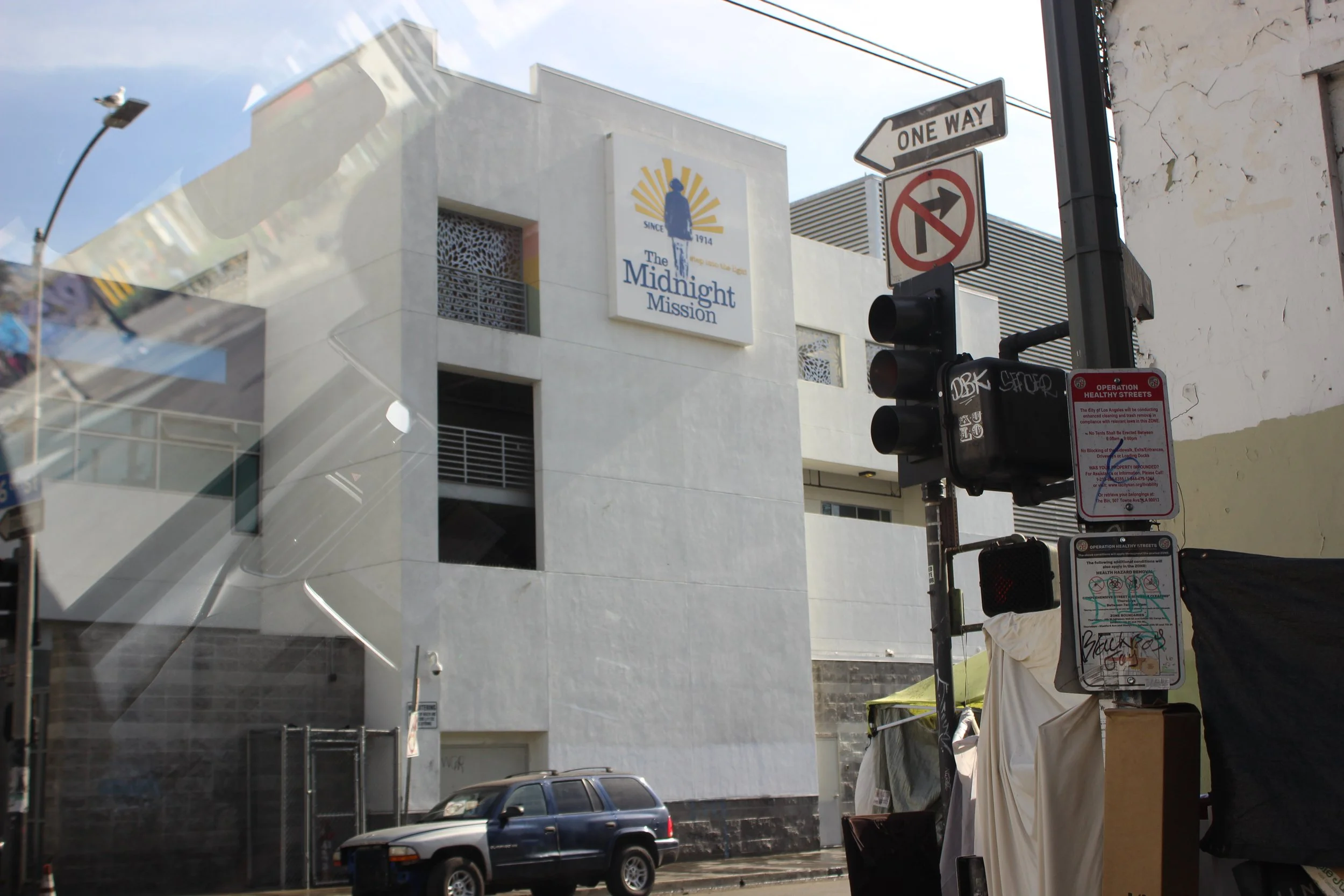
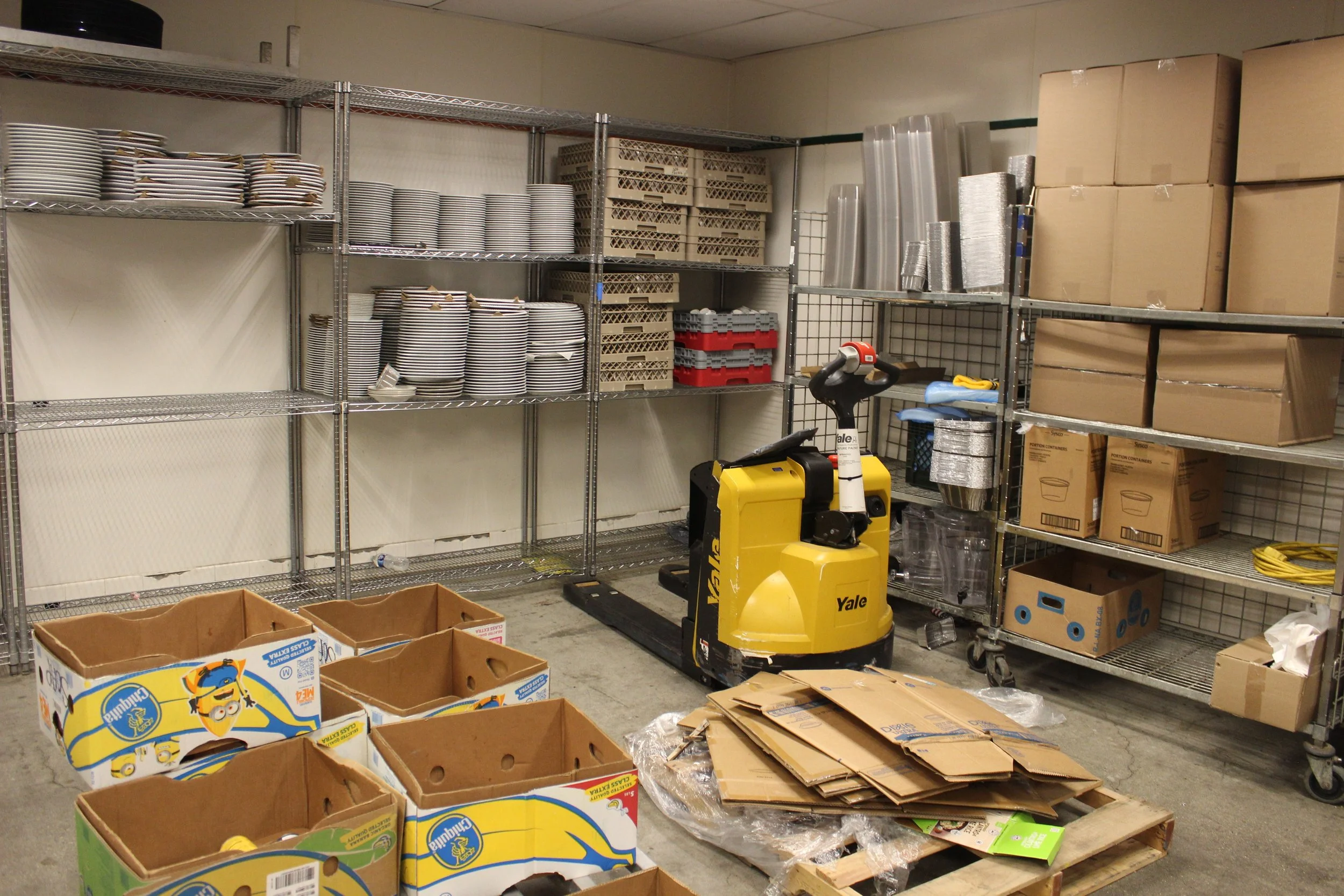
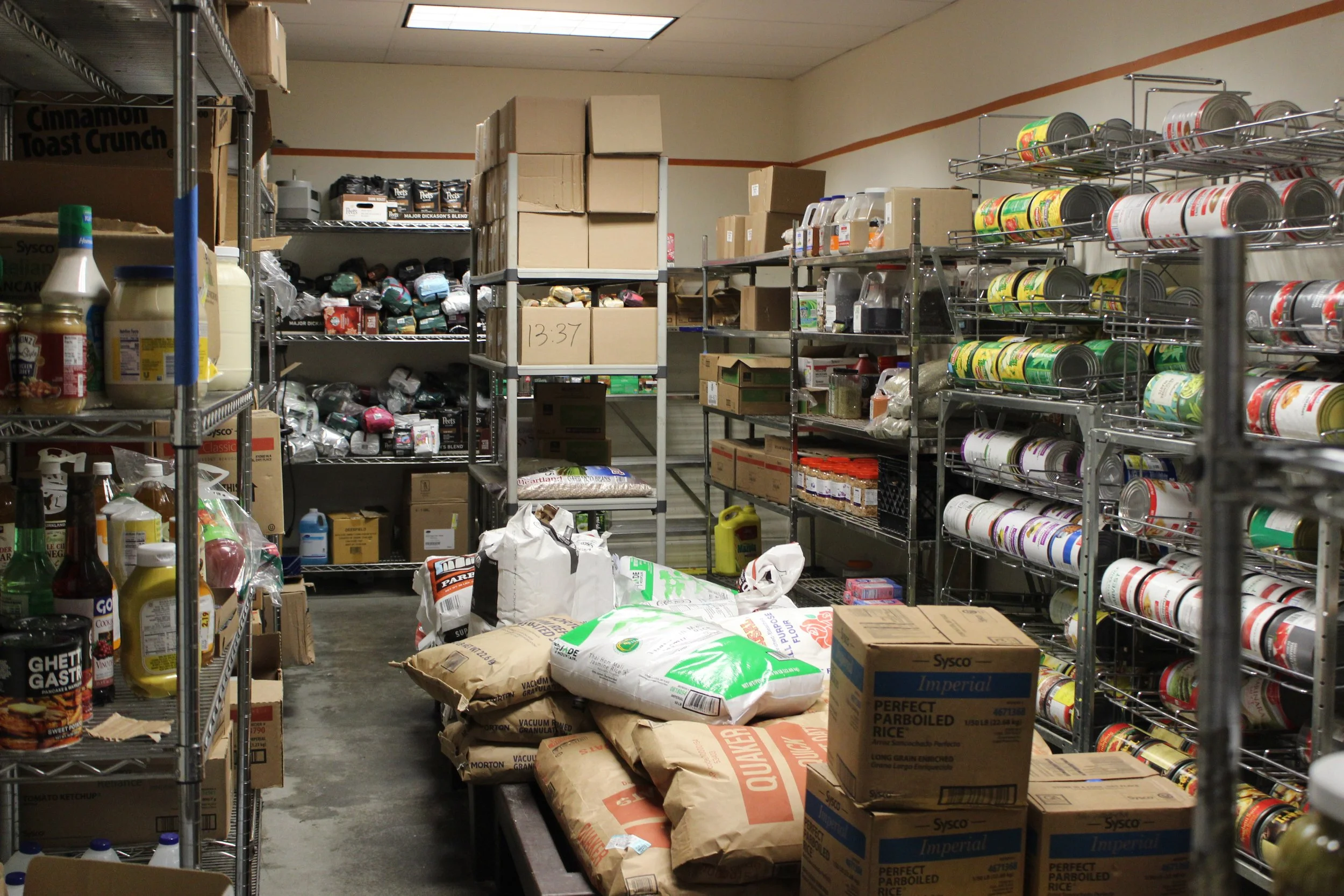
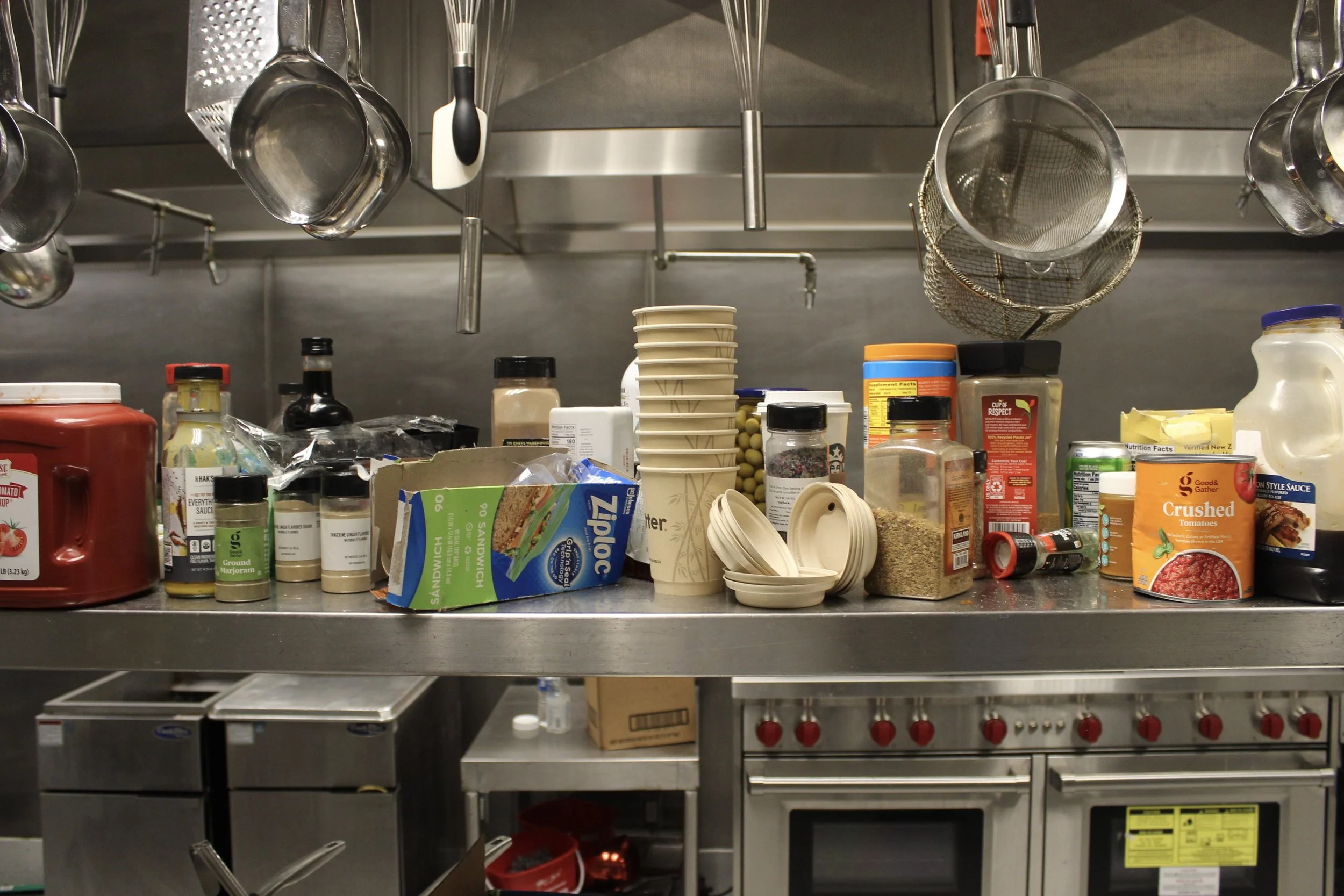
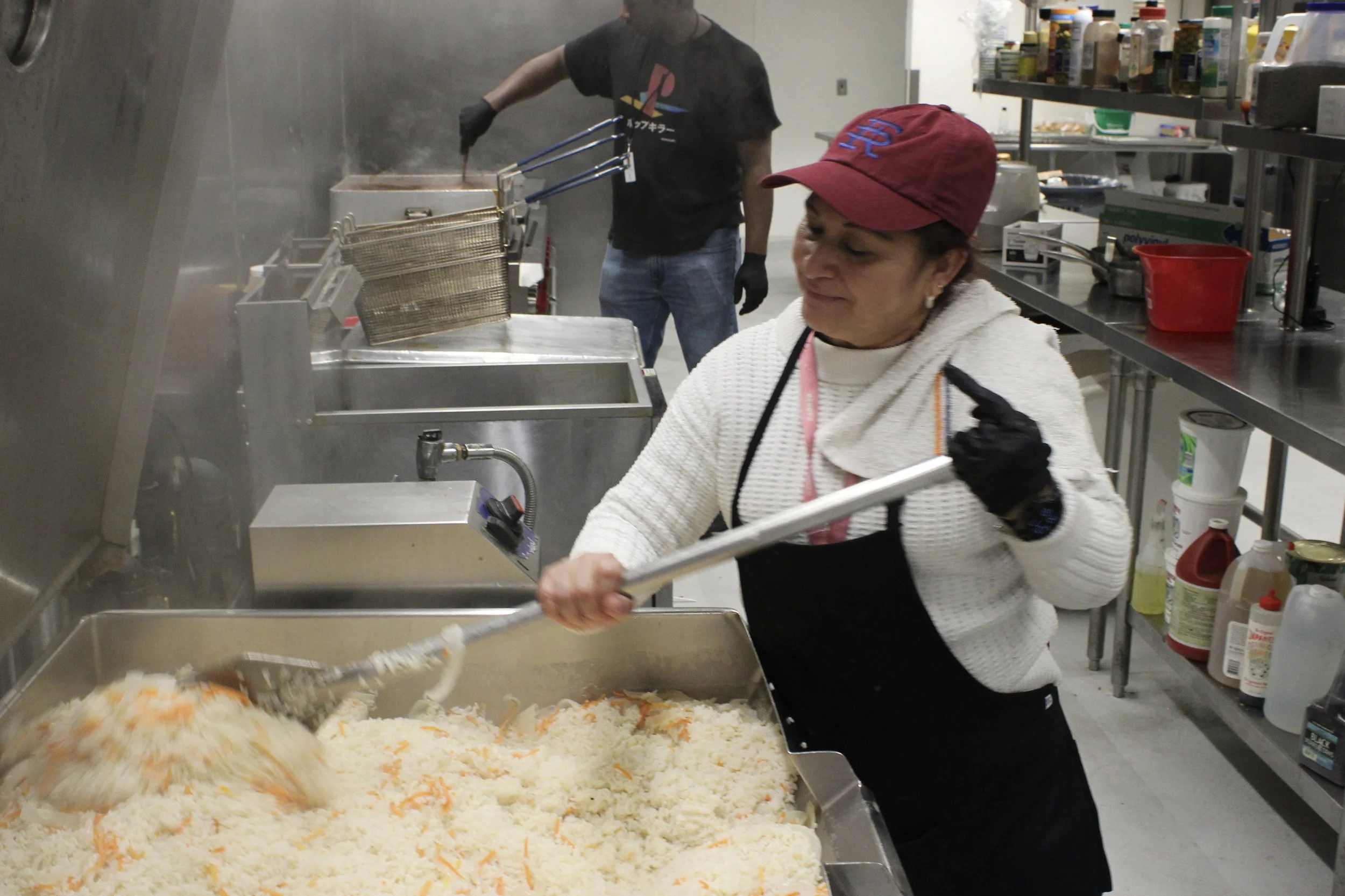
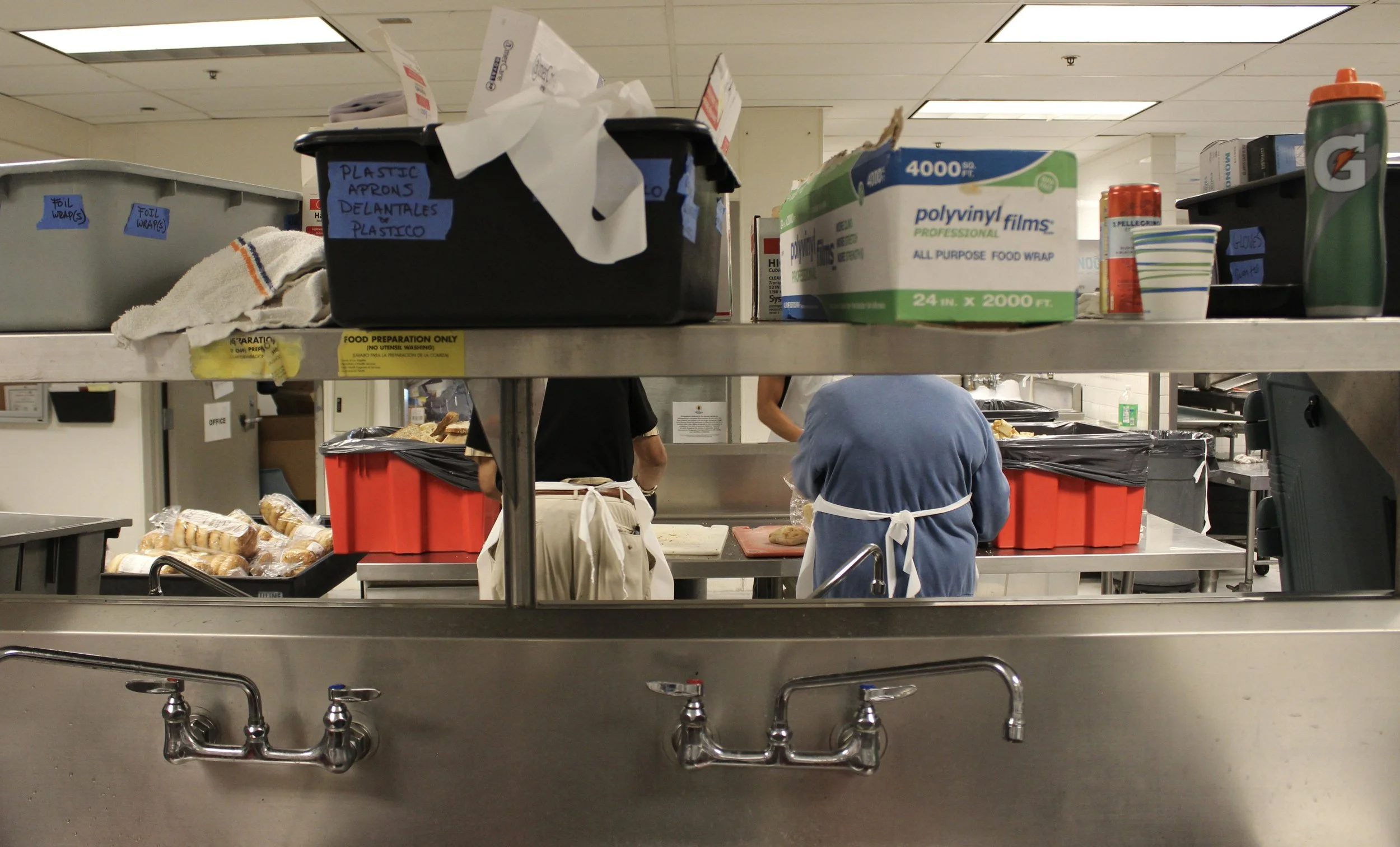
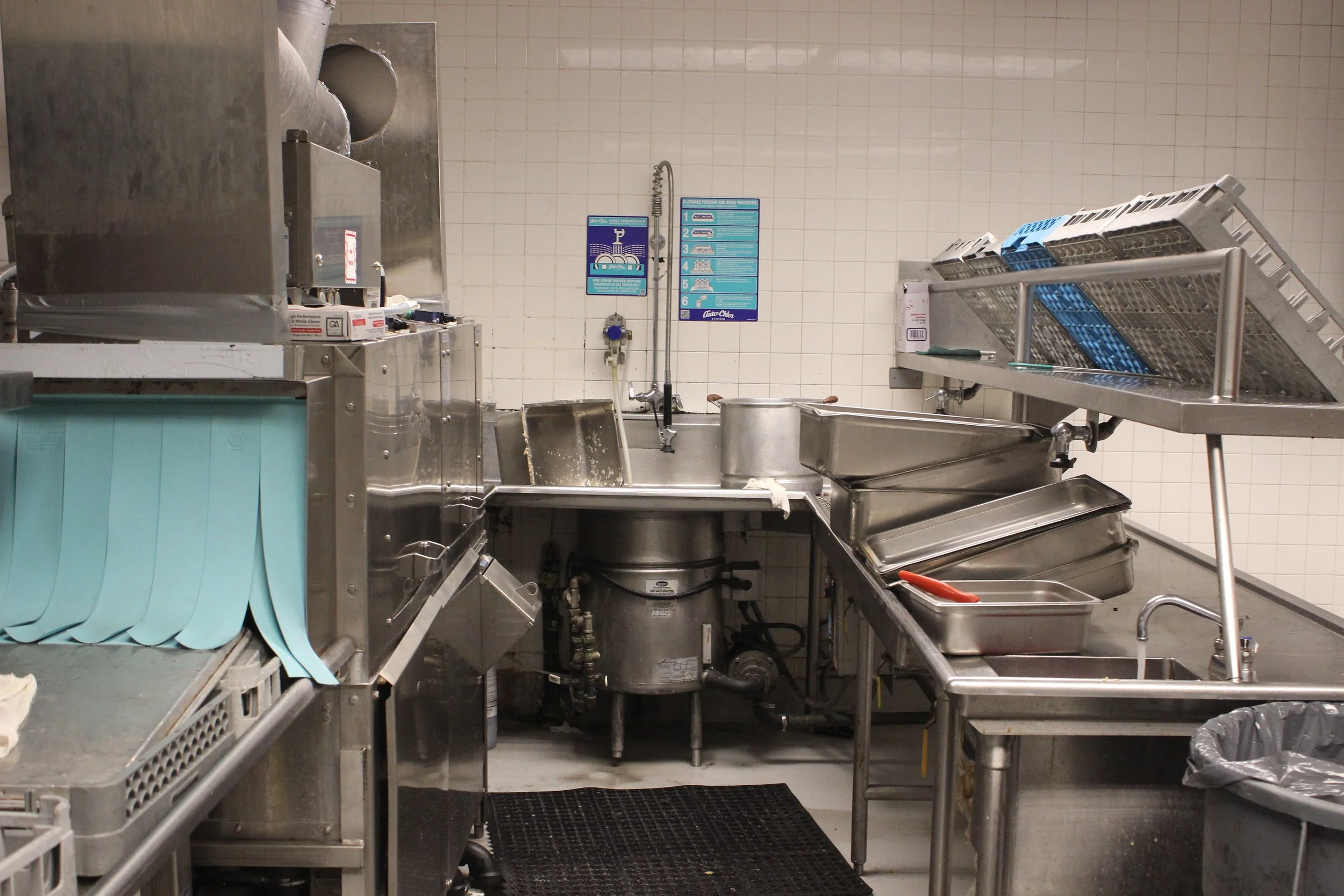
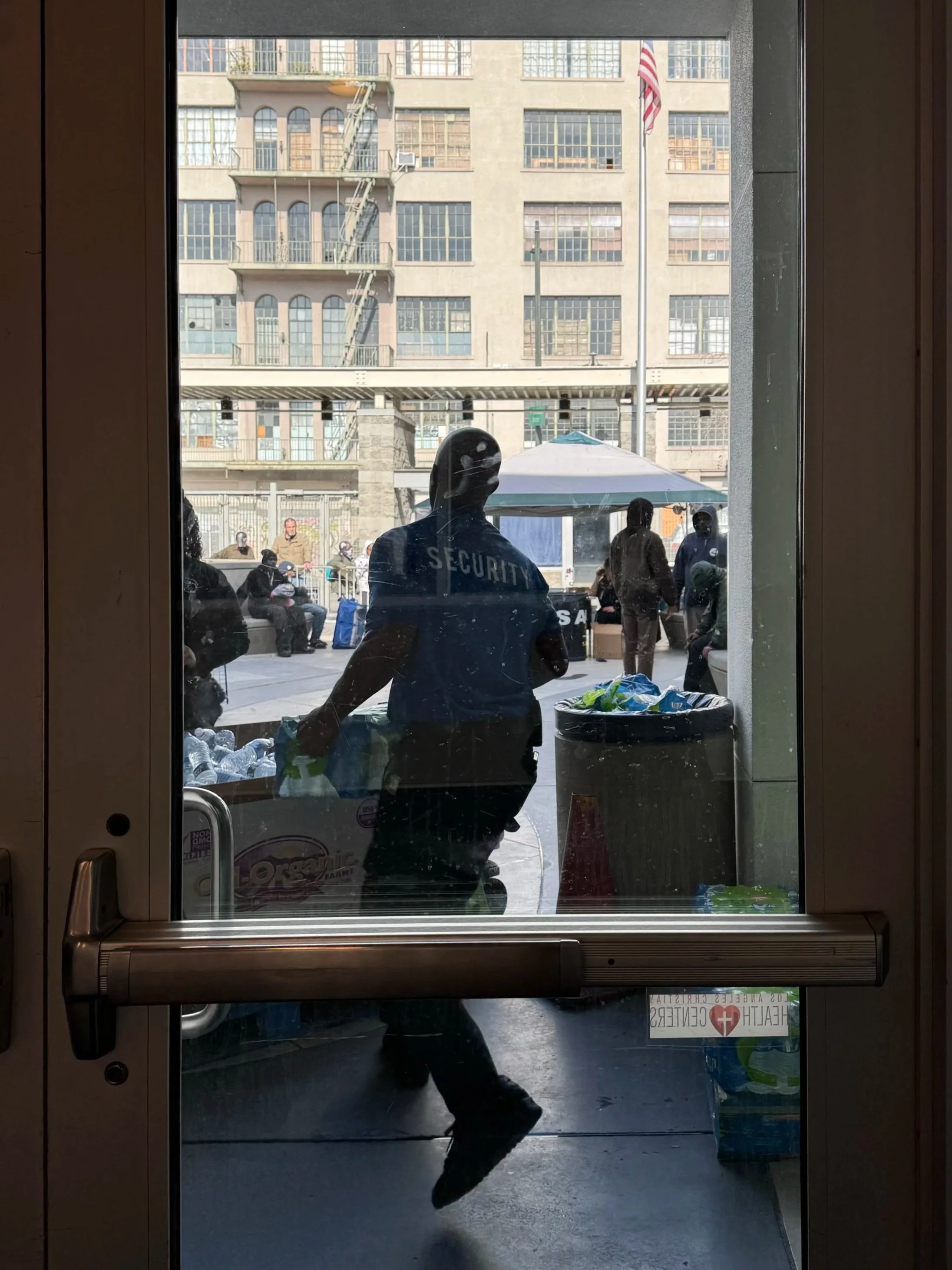
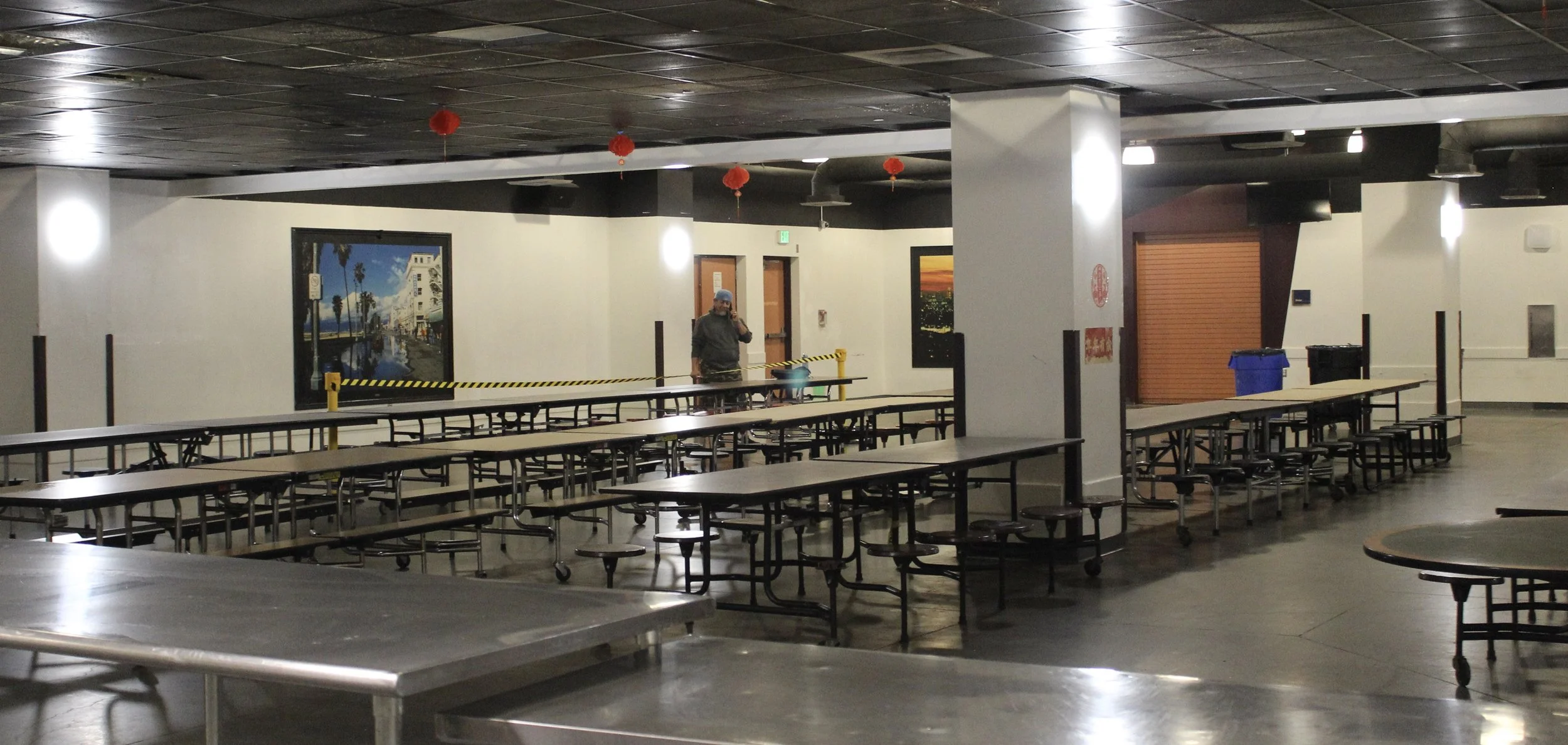
The Midnight Mission is a homeless shelter, food pantry and homeless services provider in Downtown Los Angeles. Among its many services, the organization hosts daily service meals for breakfast, lunch and dinner. While organizations like the Midnight Mission largely rely on donors and grant support to order ingredients in bulk, their meals are completely free of charge to communities struggling with poverty and homelessness, no matter what their backgrounds and stories are.
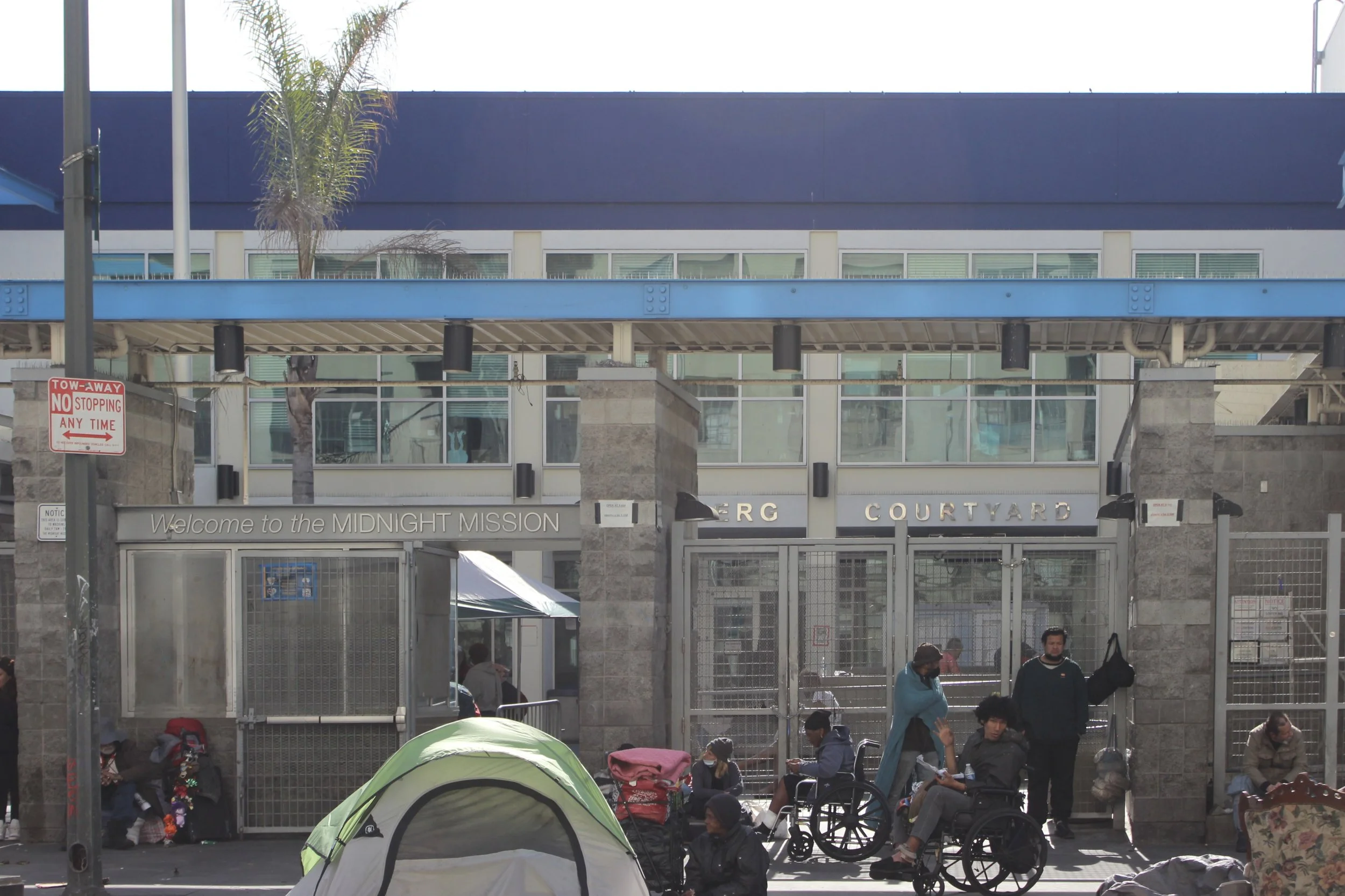
The Midnight Mission, located at 601 San Pedro St, Los Angeles, in the heart of Skid Row
b
e
h
i
n
d
the
midnight
team

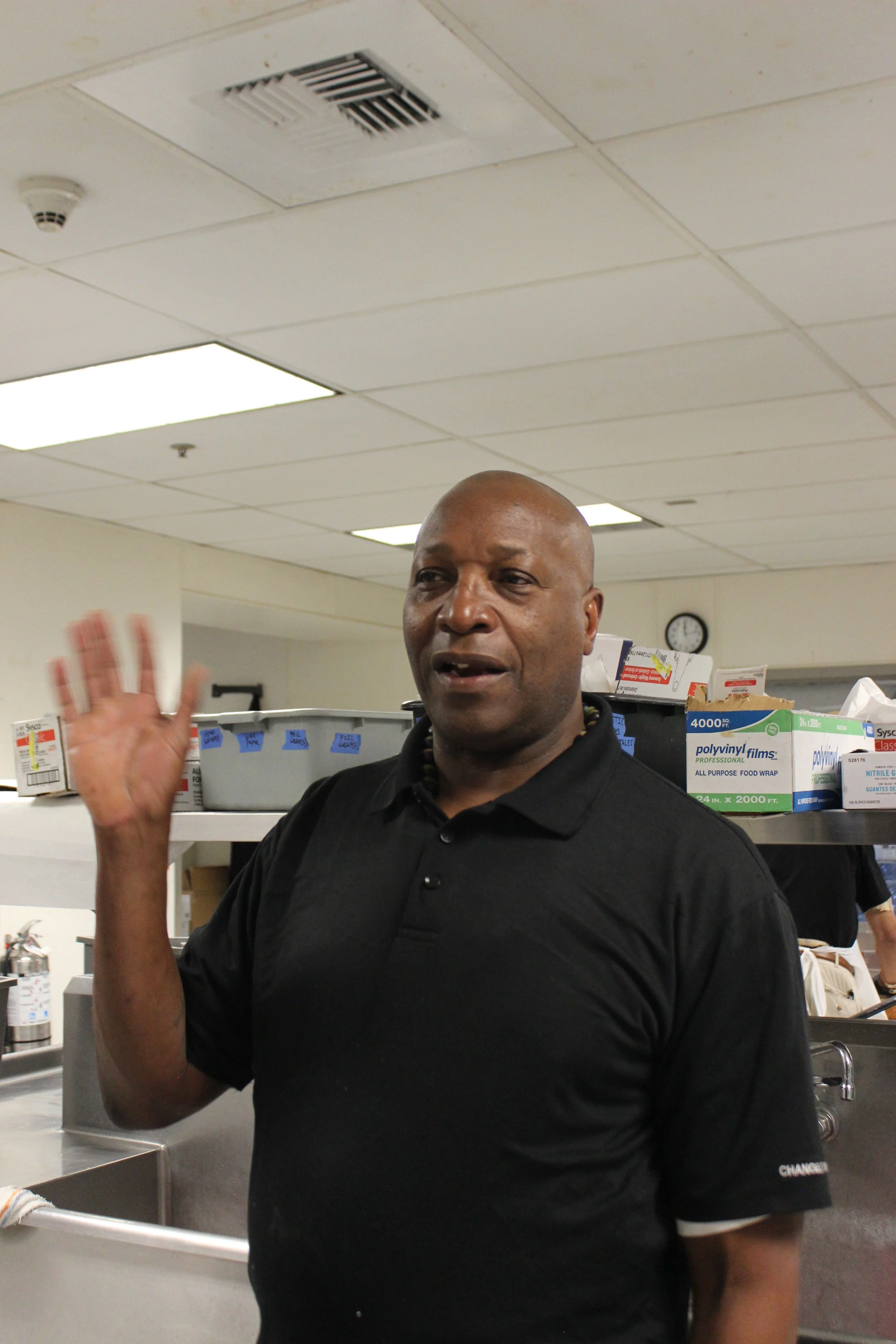
Midnight Mission Case Manager
mission
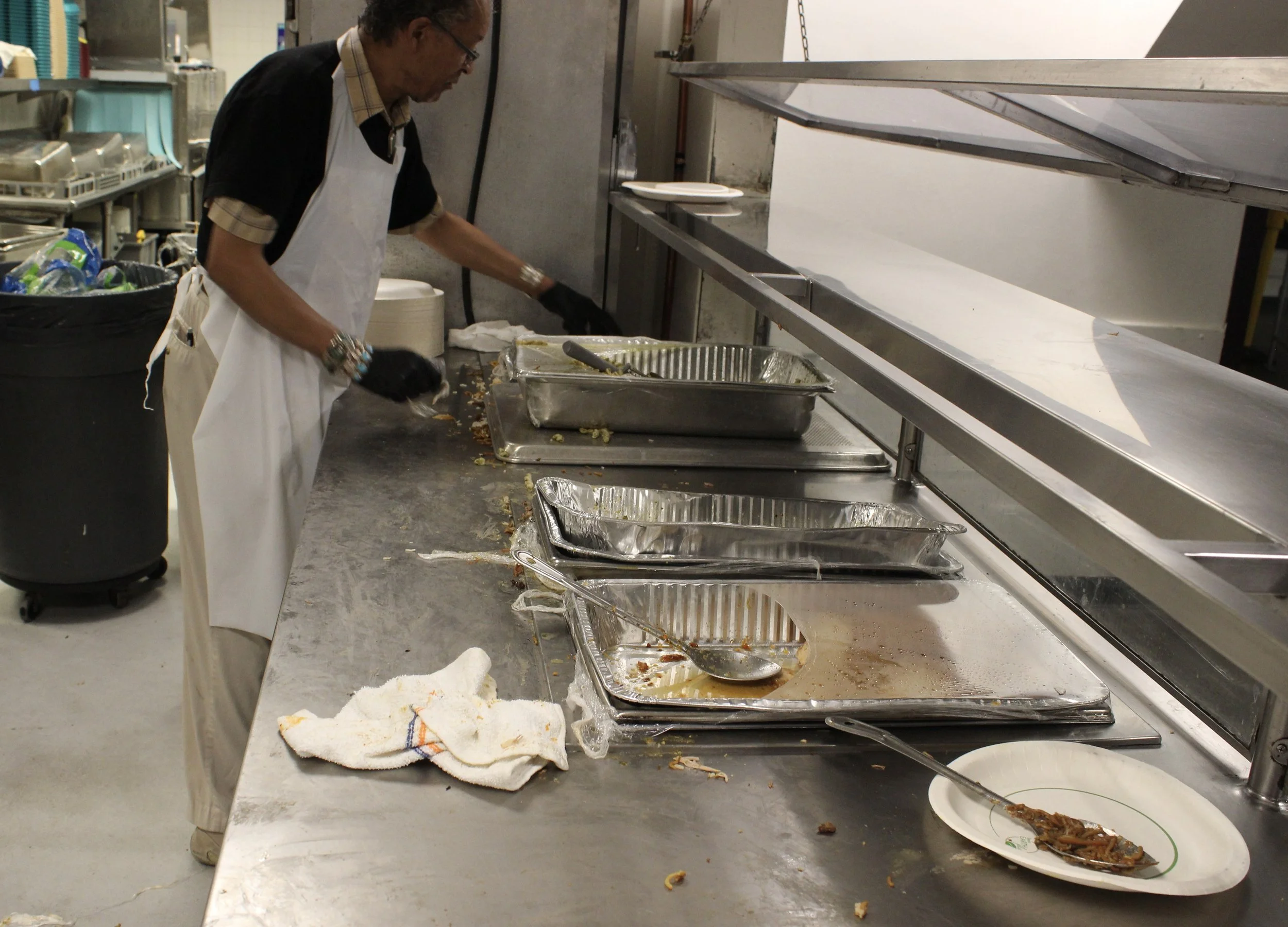
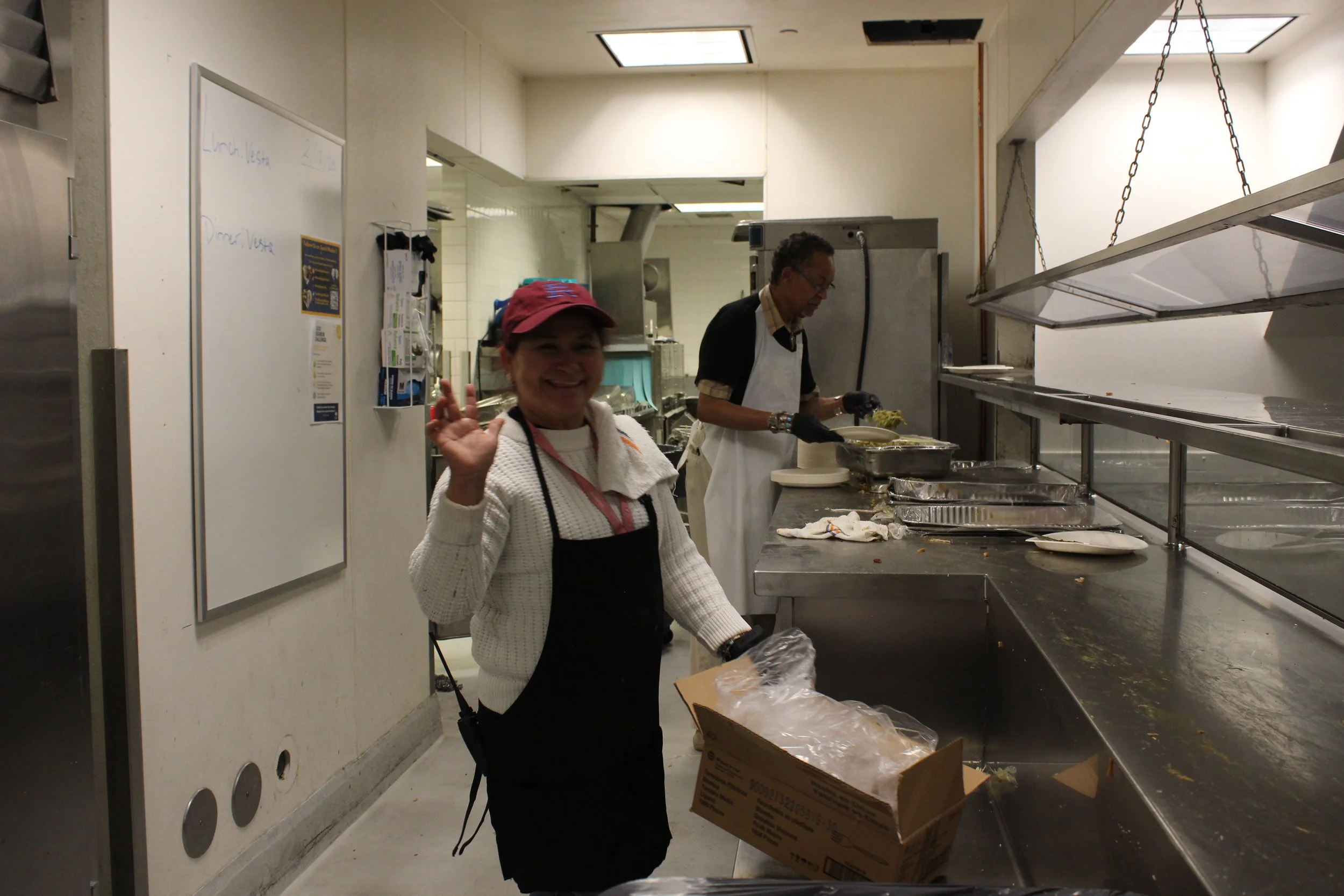
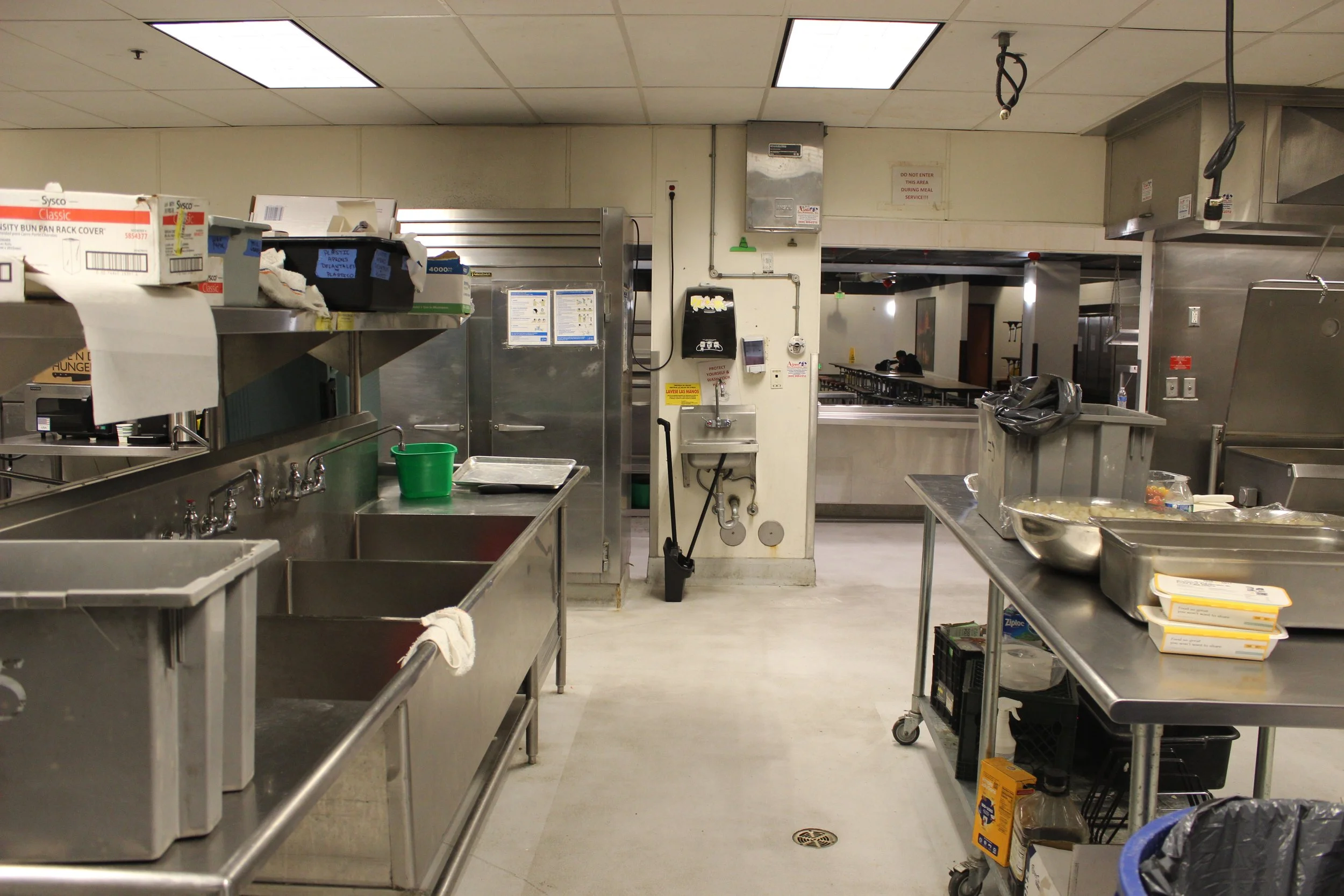
Volunteer Manager Olga cleaning up after the lunch rush
not the best or the only
Food Access L.A. calls itself the “middle-man” between food suppliers like local farmers and consumers like the low to moderate-income families throughout different communities in Los Angeles County. Food Access bridges this gap by organizing weekly farmers' markets in eight communities throughout L.A., from Compton College to Hollywood. Farmers' markets are one of the solutions that are fairly accessible and feasible for local communities to address food deserts. Among its innumerable advantages, markets increase access to fresh and locally sourced food, allow food suppliers to set their own prices and gain greater margins of profit, raise awareness of health and nutrition among the consumer base, and reduce carbon footprint by either eliminating or diminishing the long transportation of goods. Because of its mobility and how it closes the gap between food suppliers and their consumers, as illustrated above, markets present benefits to shoppers, farmers and the environment.
There is a great underappreciation of the value of human connection, community and what our loved ones and we consume. A farmers' market essentially reestablishes all of the aforementioned principles of sustainability and community building that have been replaced and overburdened by the commodification of food. It returns us to the immeasurable value of life’s basic needs that its monopolization has inevitably caused us to forget.
s
c
e
n
e
s

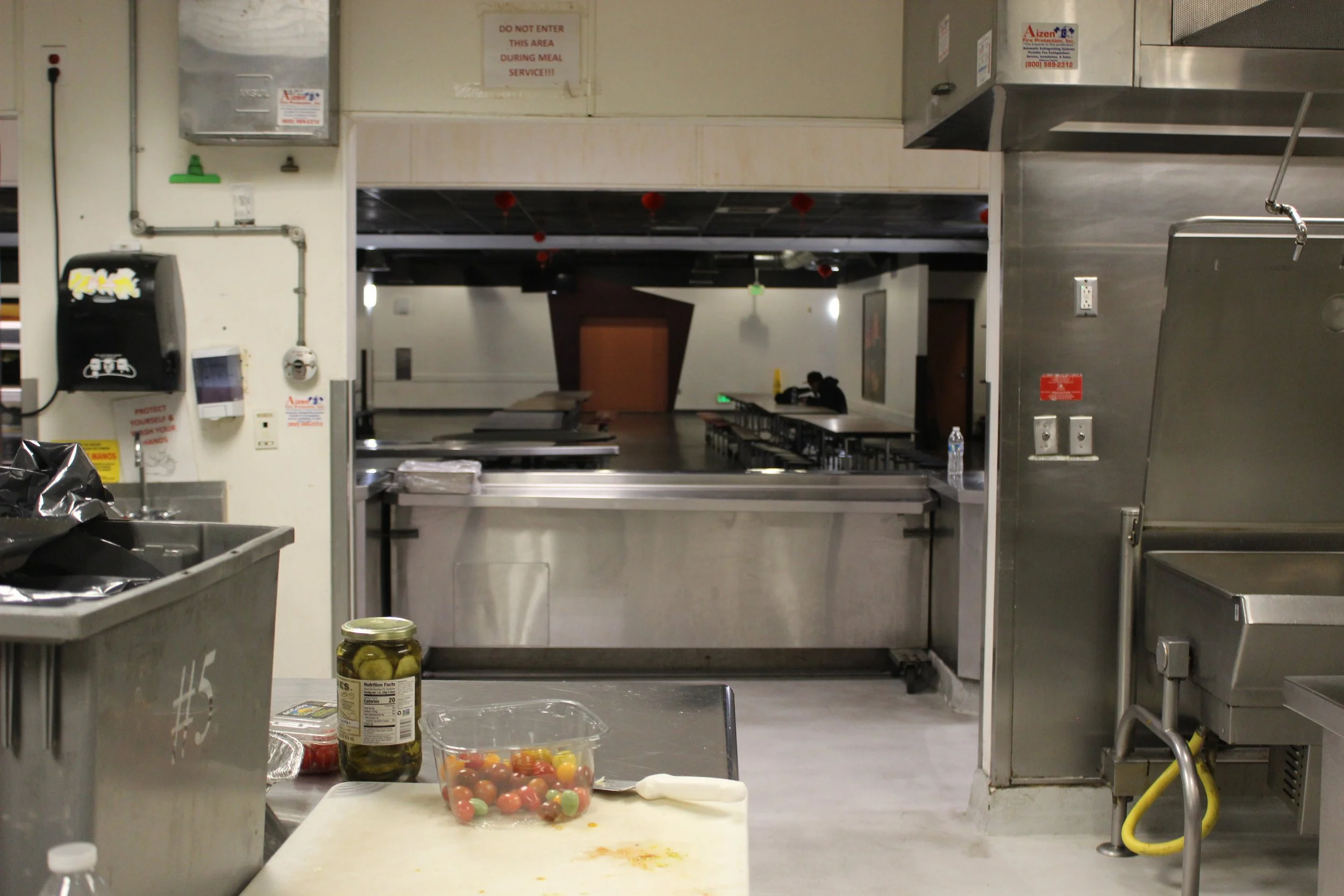
Michael, long-time service volunteer and kitchen DJ